Trump’s regional agenda to serve Israel
TEHRAN – The United States appears to be coordinating with some countries to rearrange the regional landscape by applying pressure on Syria, Lebanon and Iraq to serve Israeli interests.
Ever since U.S. President Donald Trump publicly appealed to Syrian President Ahmad al-Sharaa to intervene militarily in Lebanon and complete the mission that the war criminal Benjamin Netanyahu failed to achieve against Hezbollah, numerous political and media circles have been discussing various scenarios.
Analysts believe these include American, Turkish, French, Saudi, and Israeli maneuvers aimed at finding a reasonable and practical way to fulfill Trump’s call.
Although President al-Sharaa allegedly rejected military intervention in Lebanon, he sent his foreign minister, Asaad al-Shaibani, to examine the positions of Lebanese parties, except for Hezbollah. Al-Shaibani conducted a publicity tour in the northern Lebanese city of Tripoli, which is also considered a stronghold of Sunni political forces supported by Turkey.
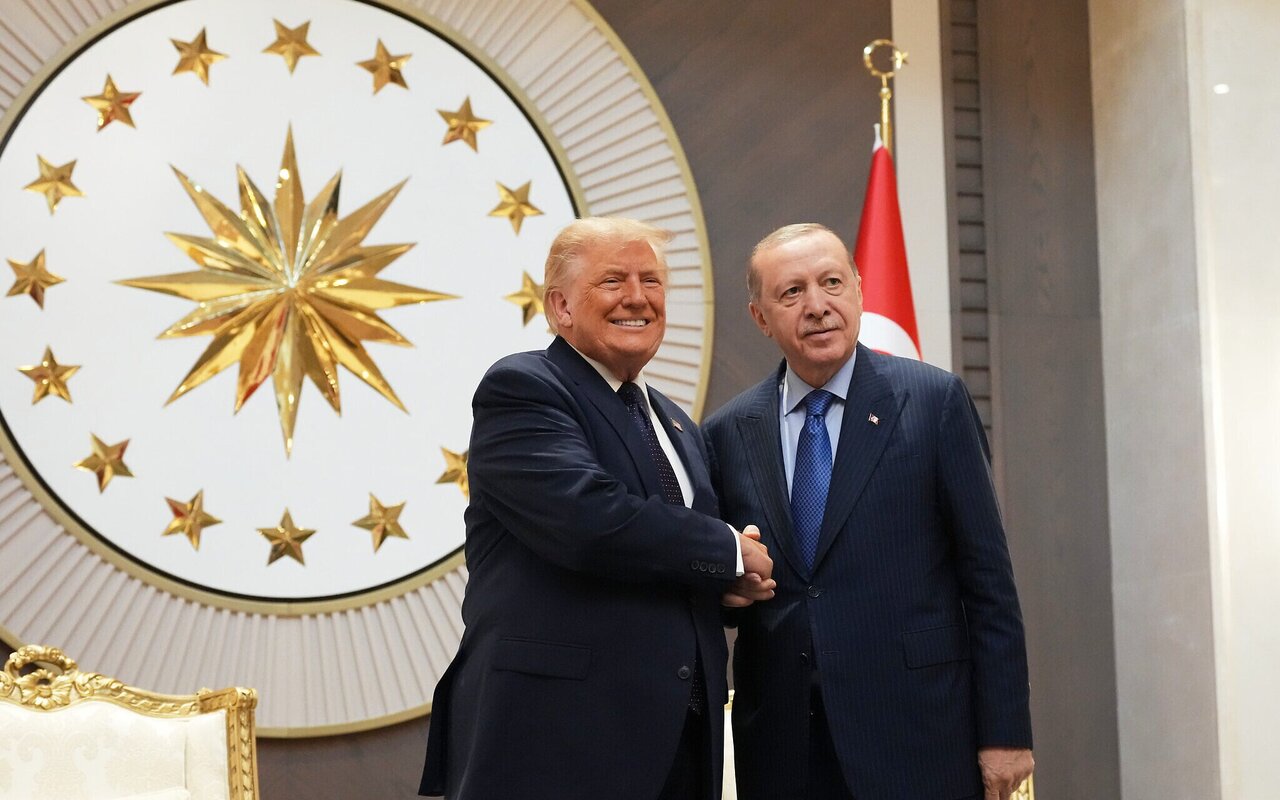
Despite reports that circulated after French President Emmanuel Macron visited Damascus indicating French rejection of U.S. plans for Syrian militants to fight Hezbollah, Trump did not hesitate to raise it again during his meeting with Turkish President Recep Tayyip Erdogan on the sidelines of the NATO summit in Ankara on July 7 and 8.
This came after Trump repeatedly praised the strength of the Turkish army, which boasts the second-largest military in NATO after the United States. Analysts have noted this may signal the need to leverage that army to serve the shared objectives between Ankara and Washington. Turkey holds significant influence over the Syrian government.
All of this prompted Trump and Erdogan to invite President al-Sharaa, who arrived at the NATO summit and met with them, and where signs of discomfort, and even tension, were apparent on his face during their bilateral meetings.
Reports at the time spoke of American pressure on al-Sharaa to play an active and swift role in U.S. plans for Lebanon. Otherwise, Washington would reconsider its relations with Syria, which would not have received any international recognition without direct U.S. support.
Analysts also pointed to American-Turkish coordination regarding regional developments, particularly in Lebanon and subsequently Iraq, clarifying Trump’s efforts to finalize his regional project, which to some extent relies primarily on Erdogan’s backing.
Trump has praised Erdogan on more than one occasion, noting that the Turkish President carries out everything America asks of him, and also indicated that he and Erdogan brought al-Sharaa to power.
Analysts further anticipated that Trump would settle his regional projects and plans following his talks with Iraqi Prime Minister Ali al-Zaidi at the White House. The U.S. President is also scheduled to host Lebanese President Joseph Aoun on July 21, and finally, Netanyahu, whom he may invite to the White House before the Israeli elections on October 27.
In Iraq, there is heavy U.S. pressure to dismantle the Popular Mobilization Forces (PMF), whose factions seek Iraqi sovereignty from America’s interference in domestic affairs. In Lebanon, the government is under pressure to disarm Hezbollah, the only source of power for the Lebanese nation.
These meetings, along with the outcomes of Erdogan’s discussions with Lebanese Prime Minister Nawaf Salam in Istanbul on July 10, and Trump’s phone call with Saudi Crown Prince Mohammed bin Salman on July 11, are expected to chart the trajectory of the upcoming U.S. phase in the region.
At the same time, Turkish intelligence chief Ibrahim Kalin had concluded his tour of Iraq, meeting with various Iraqi factions amid talk of a new and broader Turkish role in Iraq alongside cooperation with Washington. The United States assigned its ambassador to Turkey, Tom Barrack, this task, alongside his roles in Syria, Iraq and, indirectly, in Lebanon.
All of this helps explain Trump’s remarks during his meeting with Ahmad al-Sharaa about his “absolute commitment to defending Israel,” as well as his recognition of al-Quds (Jerusalem) as the regime’s capital city, along with recognizing the occupied Syrian Golan Heights as Zionist territory, without any objection from al-Sharaa.
The self-proclaimed Syrian President appears to be hoping that Saudi Arabia and Turkey will help him withstand the pressure, or rather, the openly declared and brazen American threats before the media.
After al-Sharaa returned from the NATO summit, his government alleged that it had confiscated arms heading to Hezbollah. No evidence was offered to back up the allegations.
Hezbollah’s media relations office once again denied claims that the Lebanese resistance is carrying out any activities inside Syrian territory, stressing that these allegations and accusations “are nothing more than fabricated stories with no basis in fact.”
In a statement, Hezbollah pointed out that these allegations “resurface from time to time with the aim of discrediting Hezbollah, while serving the Zionist-American project in the region.”
It emphasized that Hezbollah has repeatedly and categorically denied these allegations in the past, affirming that they are entirely false and baseless.
Al-Sharaa appears to be making these public accusations to keep Trump on his side and demonstrate that he is advancing the U.S. president’s current and future agenda. These efforts are aimed at redrawing the region’s geopolitical map once the course of U.S.-Iran relations is determined, along with the resulting implications for Lebanon, Yemen, Iraq, and the broader region.
This also helps explain Turkish Foreign Minister Hakan Fidan’s remarks to an Emirati newspaper on July 11, in which he ruled out any armed confrontation with the Israeli regime and accused Tehran of having “proxies” destabilizing regional security “just like the Israelis.”
Iranian Foreign Ministry spokesman Esmaeil Baghaei responded: “It is astonishing that someone like Mr. Fidan would make such an incorrect comparison. He himself knows that the Zionist regime is inherently expansionist and seeks to undermine the entire region, including Turkey. We wonder how he arrived at such a strange comparison.” Baghaei added, “Iran has no proxies in the region. The only proxy in the region is the Zionist regime.”
Iran certainly has allies, but Fidan’s remarks lend weight to the analysis suggesting a potential shift in Turkey’s regional policies, aligning them more closely with the U.S. agenda in coordination with the governments of Riyadh, Damascus, Baghdad, and Beirut.
Experts argue that Trump wants these parties to finalize their decisions in favor of his plans before the end of this month, enabling him to possibly secure additional military and political victories, as well as economic gains, ahead of the U.S. midterm elections in November. Those elections are expected to be pivotal, as losing the Republican majority in both the House of Representatives and the Senate could have significant political and personal consequences for him.
With the renewed U.S. aggression against Iran and the Saudi bombing of Sanaa International Airport, it has become clear that some actors in the region have failed to draw lessons from everything they have experienced over the past three years.
The genocide in Gaza, the aggression against Lebanon and later Iran, and before that the fall of Syria’s government all unfolded within the framework of a regional and international agenda that ultimately served only the interests of the Israeli regime.
The regime sought to achieve its objectives in Lebanon and, through it, across the region. Those efforts were thwarted by the firm stance of Iranian negotiators during the Islamabad talks, which blocked the plans of those coordinating with Tel Aviv in Lebanon. However, these efforts continue under the American-Lebanese-Israeli “framework agreement”.
Trump’s agenda would exploit Lebanon and Iraq’s religious, sectarian, and political divisions, seeking to deepen those fractures in pursuit of what he blindly views as a decisive blow against Iran following its recent diplomatic, political, and military gains.
What Washington fails to understand is that Tehran has never asked its allies in Iraq, Lebanon, or Yemen to act militarily on its behalf. These countries all have their own deep grievances with the United States and the Zionist regime, a matter lost in the region’s geopolitical landscape.
Leave a Comment